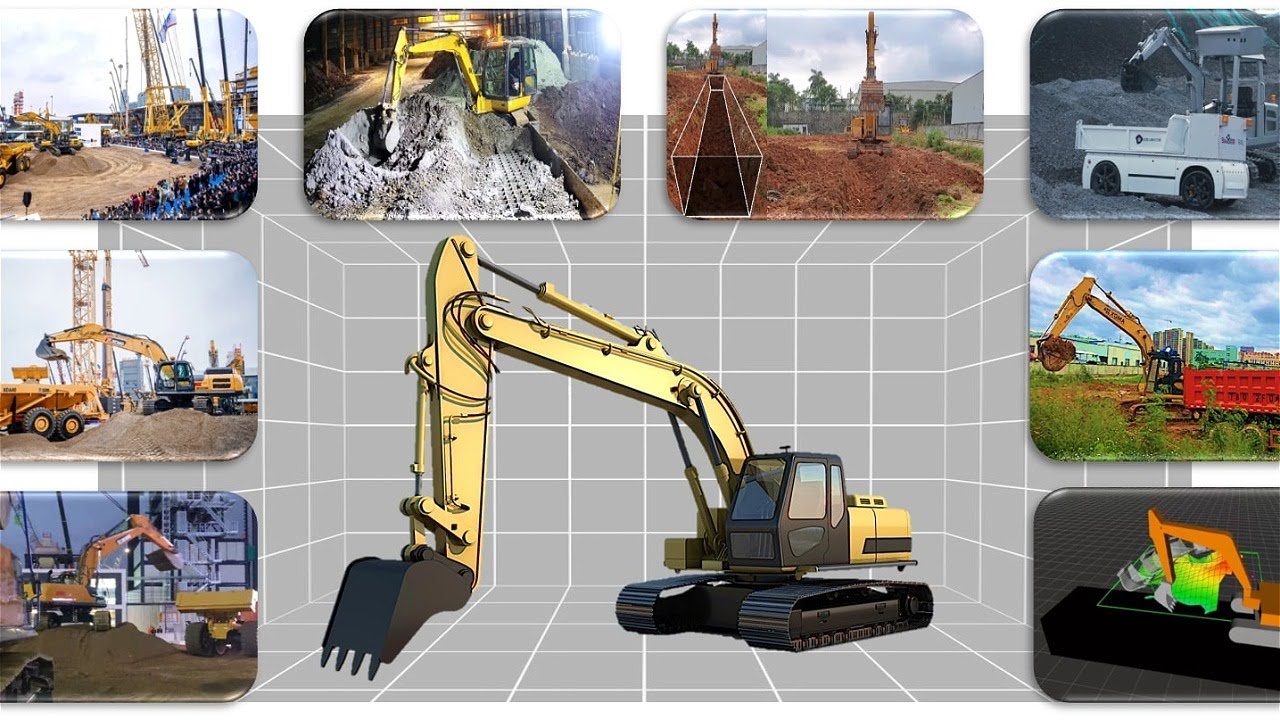
Autonomous Machineries
A production-oriented robotics system for turning heavy machinery into reliable autonomous field operators.
Engineering interview discussion · August 4, 2026
My role was to connect robot autonomy with messy real-world machinery.
About me
I like building systems where perception, planning, controls, and operator workflow have to survive outside the lab.
Problem setting
Heavy equipment works in dynamic, unstructured environments where human operators absorb huge variability.
Engineering goal
Create a modular autonomy stack that can be adapted across machine types, sites, and safety requirements.
The core design separated field sensing, autonomy decisions, and machinery actuation.
Sense & Estimate
- Multi-sensor perception for scene understanding
- Localization and state estimation under vibration and dust
- Replayable data logs for debugging edge cases
Plan & Decide
- Task-level behavior and route planning
- Safety-aware motion decisions around people and assets
- Fallback states for degraded sensing or control
Control & Operate
- Machine-specific control adapters
- Operator supervision and remote intervention paths
- Cloud/data loop for fleet learning and maintenance
Modularity made the system testable, portable, and safer to evolve.
Hardware boundary
Normalize sensors, drive-by-wire signals, hydraulics, and machine health behind explicit adapters.
Autonomy contracts
Keep perception, planning, control, and safety services loosely coupled through versioned interfaces.
Safety envelope
Use state machines and monitors so autonomy can degrade gracefully instead of failing silently.
Sim/replay loop
Turn field failures into deterministic tests before changing robot behavior in production.
The outcome was both technical credibility and business leverage.
The system generated publishable robotics work and reusable technical narratives.
Architecture, safety, perception, or control innovations became protectable assets.
Autonomy moved from prototype value to customer-facing machinery capability.
The modular stack reduced reinvention across machines, sites, and follow-on products.